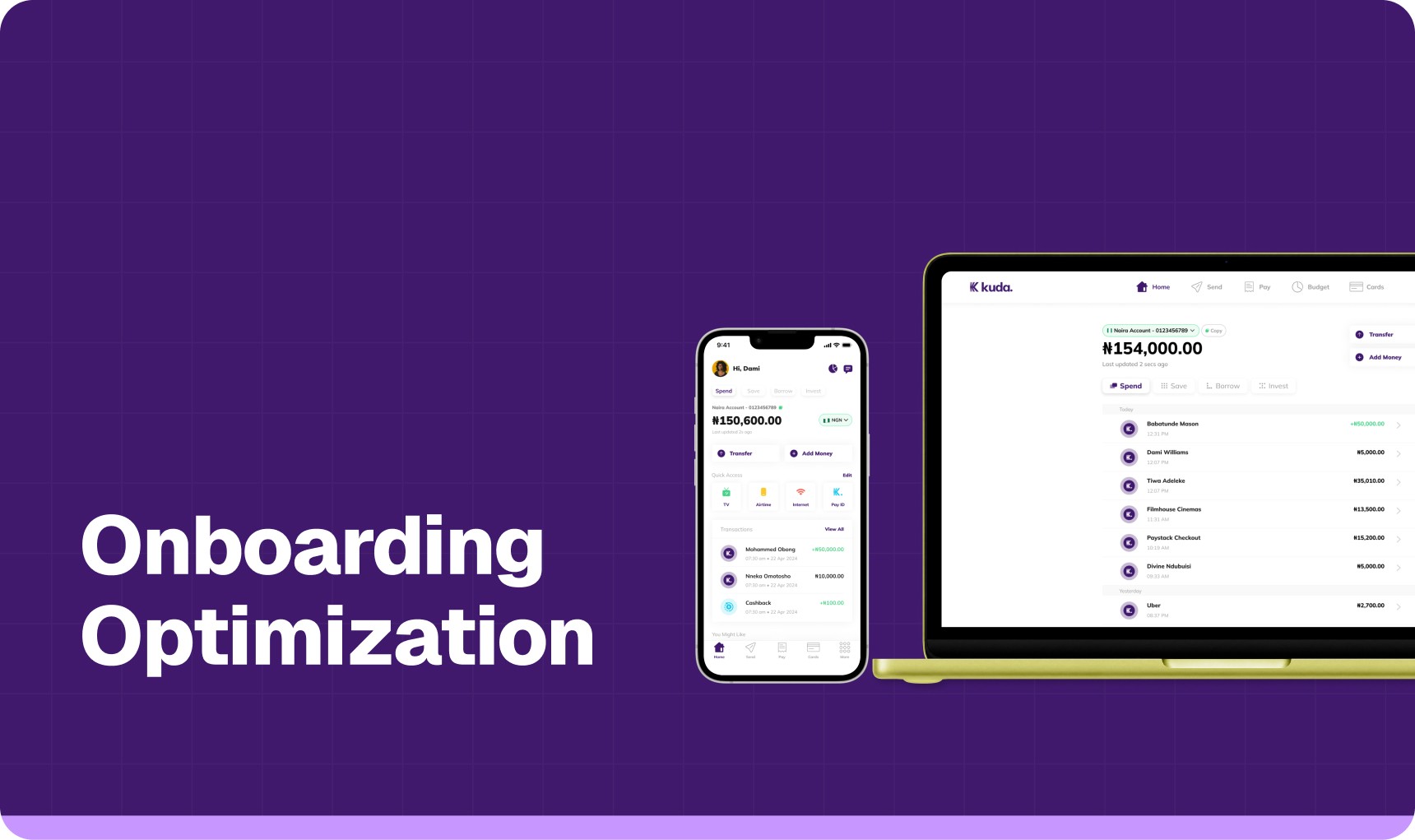
Kuda, the money app for Africans provides financial solutions for over 7 million customers in Nigeria. I created a system that helps manage the different products, file organization and workflow structure.
ROLE
Product Design
PLATFORM
Web
Mobile
BACKGROUND
Kuda, a leading digital bank in Nigeria, had maintained a ₦1,000,000 single transfer limit since its inception in 2019. This limit was compliant with NIBSS NIP regulations for microfinance banks. However, as Kuda's customer base evolved to include individuals, freelancers, and growing businesses, this limit began to create friction—particularly for high-value transactions.
In 2023, NIBSS received approval from the Central Bank of Nigeria (CBN - Nigeria’s Apex Bank) to revise these limits significantly: from ₦1M to ₦25M for individuals and ₦1M to ₦250M for business/API customers. This update provided an opportunity for Kuda to respond to user needs and improve customer retention.
Goals
To revise Kuda's default and maximum single transaction limits in line with new regulatory allowances, while maintaining strict security and compliance protocols. The objectives were to:
Enable customers to perform higher-value transfers without unnecessary friction.
Retain high-value retail and business users.
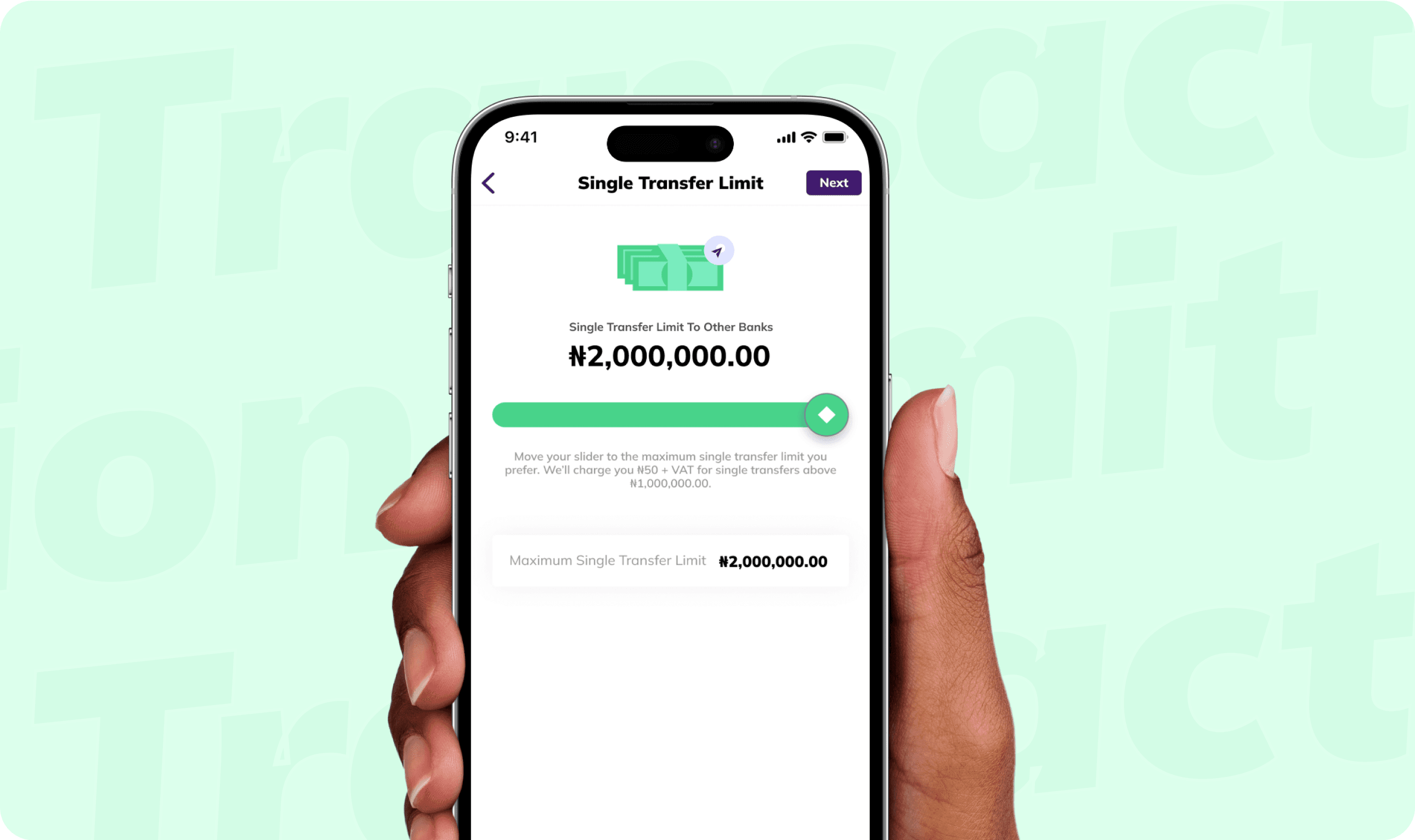
Enable customers set their single transfer and daily transfer limits (within the CBN approved limits)
Problems
Regulatory Constraint: The long-standing NGN 1M limit was no longer aligned with new CBN regulations.
Customer Frustration: Many high-value users complained about the transfer ceiling, leading to loss of customers —especially among business customers.
Operational Limitations: Internal teams lacked tools to manually and securely increase user transfer limits.
Research And Insights
We conducted internal feedback sessions with Customer Support and Compliance teams and reviewed user complaints and app reviews to identify recurring themes:
“Why can’t I send more than 1 million at once?”
“Other banks allow higher transfers. Why is Kuda different?”
“I have business payments to settle urgently but can’t increase my limit quickly.”
These insights guided us toward improving clarity, self-service options, and response speed — without compromising regulatory compliance.
Solution
Contextual Limit Messaging: Customers clearly saw their current limit, eligibility criteria, and next steps to upgrade.
Verification Flow: Only relevant documents (e.g., CAC docs for businesses, ID for individuals) were requested, reducing friction.
Progressive Disclosure: Higher-value transfer prompts triggered 2FA and additional verification, so trust scaled with transaction size.
*Even though this product solution involved the retail and business version of the product as well as our internal CBA (Core Banking Application), for this case study we’ll be focusing on just Kuda retail product.
We also introduced a tiered, transparent, and user-centred flow that aligned with regulations. The tier levels and their single transaction limits are;
Tier 1 - ₦50,000
Tier 2 - ₦100,000
Tier 3 - Up to ₦2,000,000 and Up to ₦25,000,000 (approval required)
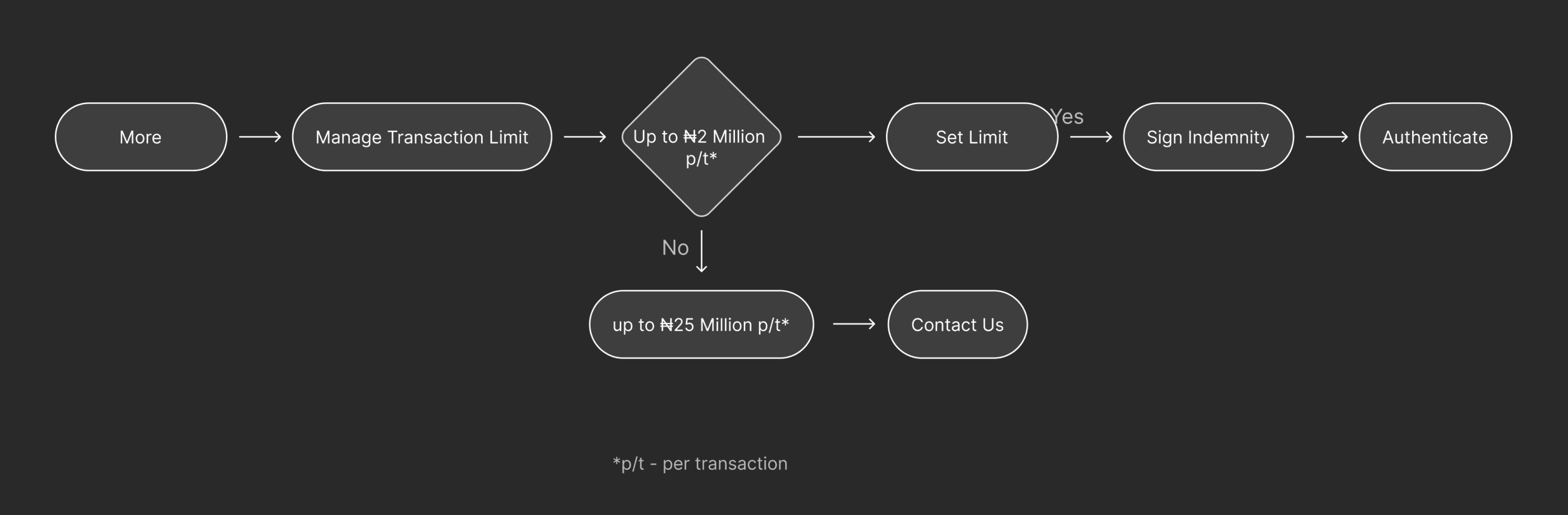
*User Flow
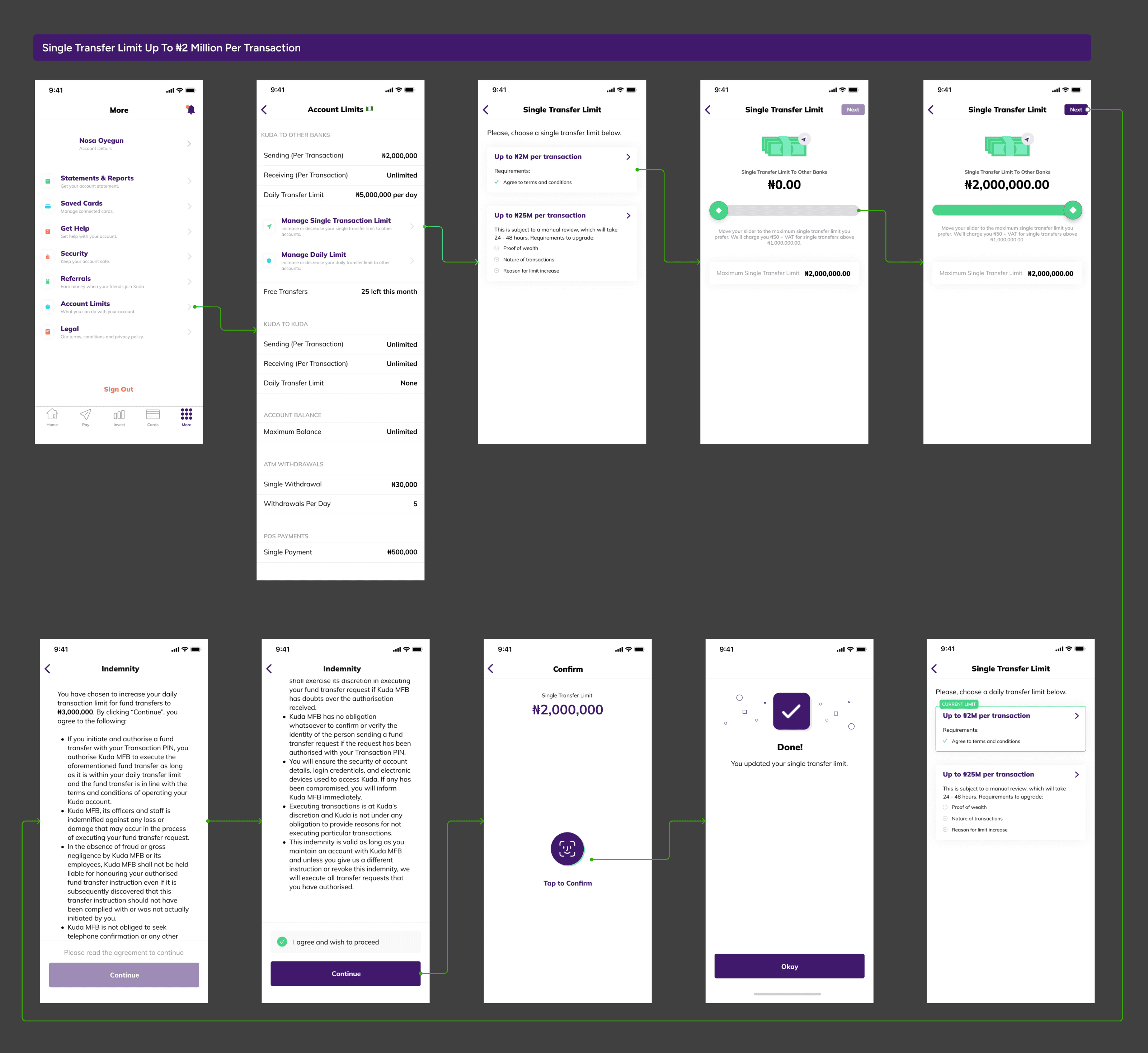
*Single Transfer Limit Up To ₦2 Million Per Transaction - Tier 3
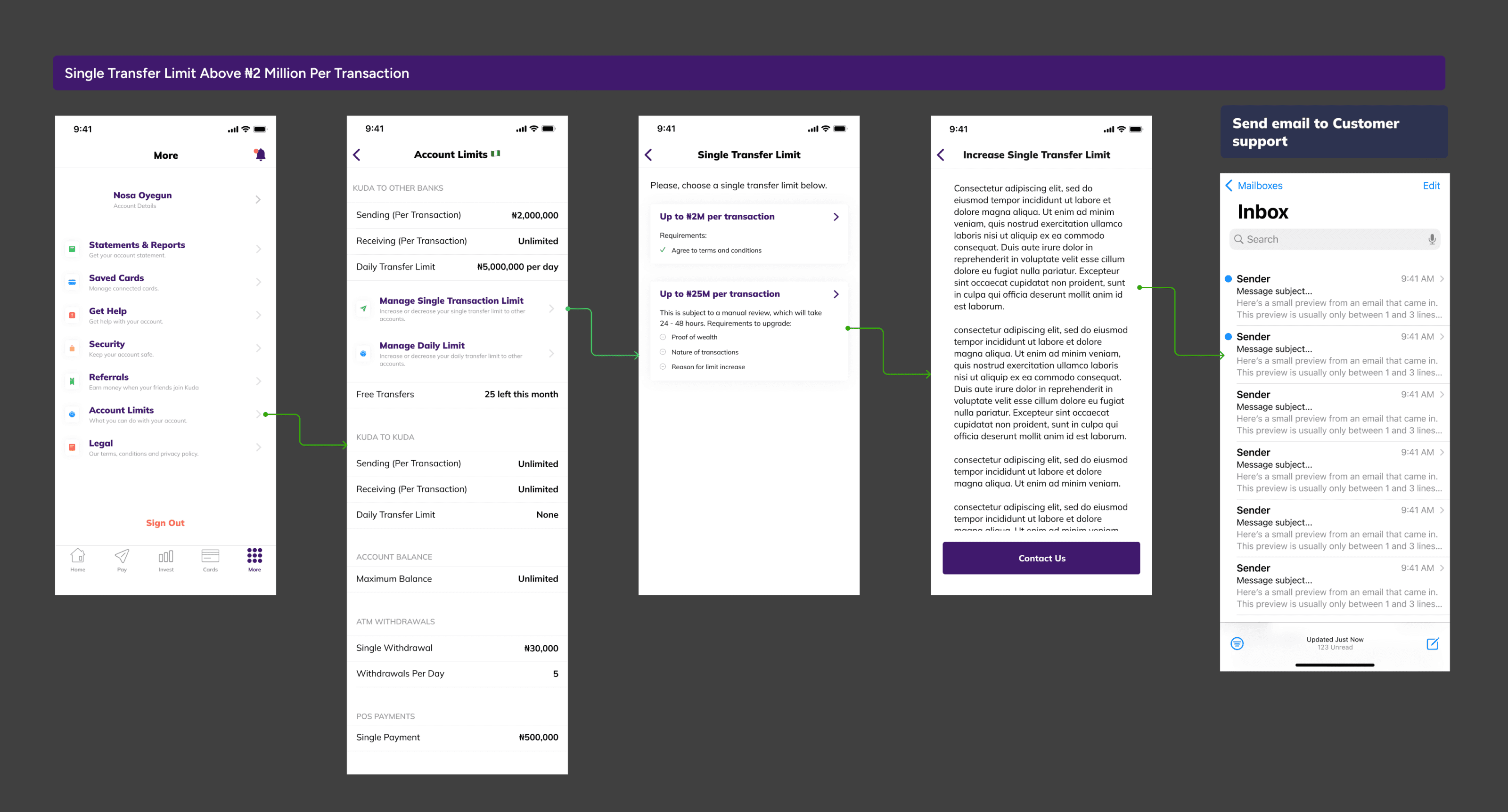
*Single Transfer Limit Above ₦2 Million Per Transaction - Tier 3
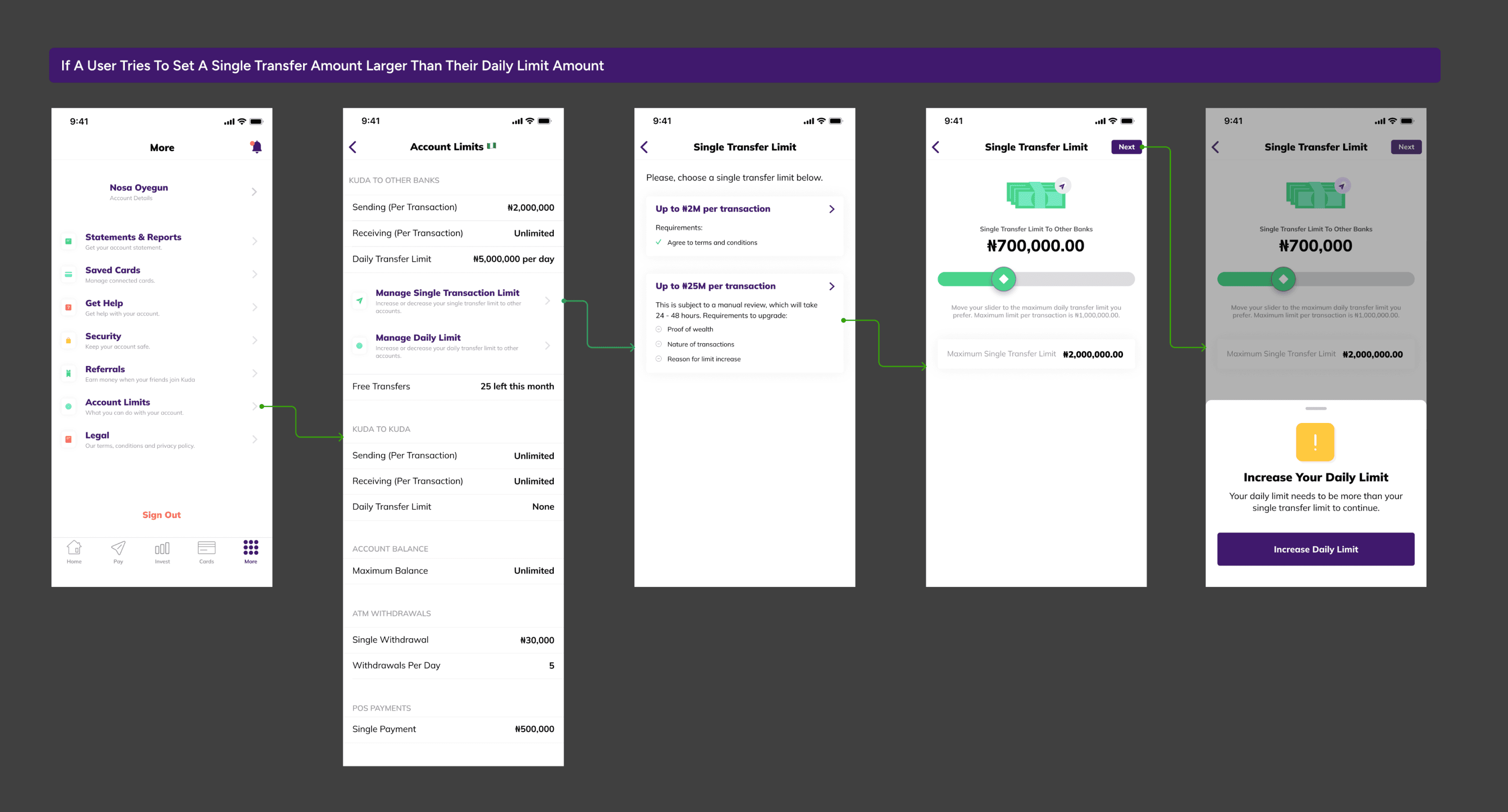
*If A User tries to set a single transfer amount larger than their daily limit amount - Tier 3
Impact
+45% MoM increase in transactions above ₦1M within 3 months of launch
Reduced churn among high-value business customers; many reactivated dormant accounts
30% drop in support tickets related to limit requests
Takeaways
UX-Compliance Collaboration Matters: Designing within regulatory frameworks requires close partnership with Compliance and Risk teams.
Empowering Users Builds Trust: By enabling transparent limit control, we increased confidence in Kuda’s capability for both personal and business banking.
Security Should Feel Seamless: Smart triggers (2FA, role approvals) scaled security without overwhelming users.